
Breaking Barriers in Sustainable Fashion: Aish Mann’s Journey
When Aish Mann first attended the Circularity conference in Seattle in 2023, she did so entirely on her own—volunteering her time, paying out of pocket, skipping meals, and stretching every dollar just to be in the room. As a newcomer to Canada, Aish was looking for spaces where she could explore opportunities. But it also laid bare the financial and systemic barriers many youth who are members of equity-seeking groups face when trying to access influential spaces where climate solutions are shaped.
A year later, Aish returned to the conference under dramatically different circumstances. In 2024, she attended Circularity 24 in Chicago with support from an Access Grant provided by Finance Engage Sustain (FES). The grant covered her travel, registration, accommodations, and meals—transforming what was once an exhausting sacrifice into a powerful moment of growth. Freed from financial constraints, Aish stepped into the space not just as an attendee, but as a confident leader—ready to connect, collaborate, and amplify youth-led climate justice advocacy.
Aish’s path to leadership is rooted in resilience and lived experience. As an immigrant woman of colour bringing experience in the climate sector from Malaysia, she brings a grounded perspective to her role at Threading Change—a youth-led organization committed to global fashion justice.
Threading Change’s mission is both urgent and visionary: to challenge the exploitation embedded in fashion supply chains, especially those impacting racialized communities in the Global South. Through policy advocacy, youth engagement, and education programs rooted in circular economy principles, the organization works to build climate-resilient communities that prioritize people and the planet over profit and pollution.
Despite her passion and expertise, Aish repeatedly encountered barriers to accessing spaces where systemic change is discussed. Conferences like Circularity—where major players in sustainable fashion gather—were often financially and institutionally out of reach.
“One thing that really stood out to me was how many fashion spaces tend to be white-centric, with folks trying to make changes from their own lens,” Aish shared. “Being able to say, ‘Hey, we do this work with Bangladesh and others, and this has been our experience,’ was a powerful moment.” She also found it eye-opening to “learn about U.S. initiatives like the American Circular Textiles Association and groups like Accelerating Circularity expanding textile recycling efforts.”
The $1,400 Access Grant from FES was a pivotal turning point. It covered all of Aish’s major costs—registration, travel, accommodations, and food—expenses that had previously limited her ability to attend similar events.
“For the first time, I didn’t have to think twice about meals,” Aish said. “Being a newcomer, food is always expensive, and I had developed a sort of disordered eating around it. But this time, I could eat without stress, knowing it was reimbursed.”
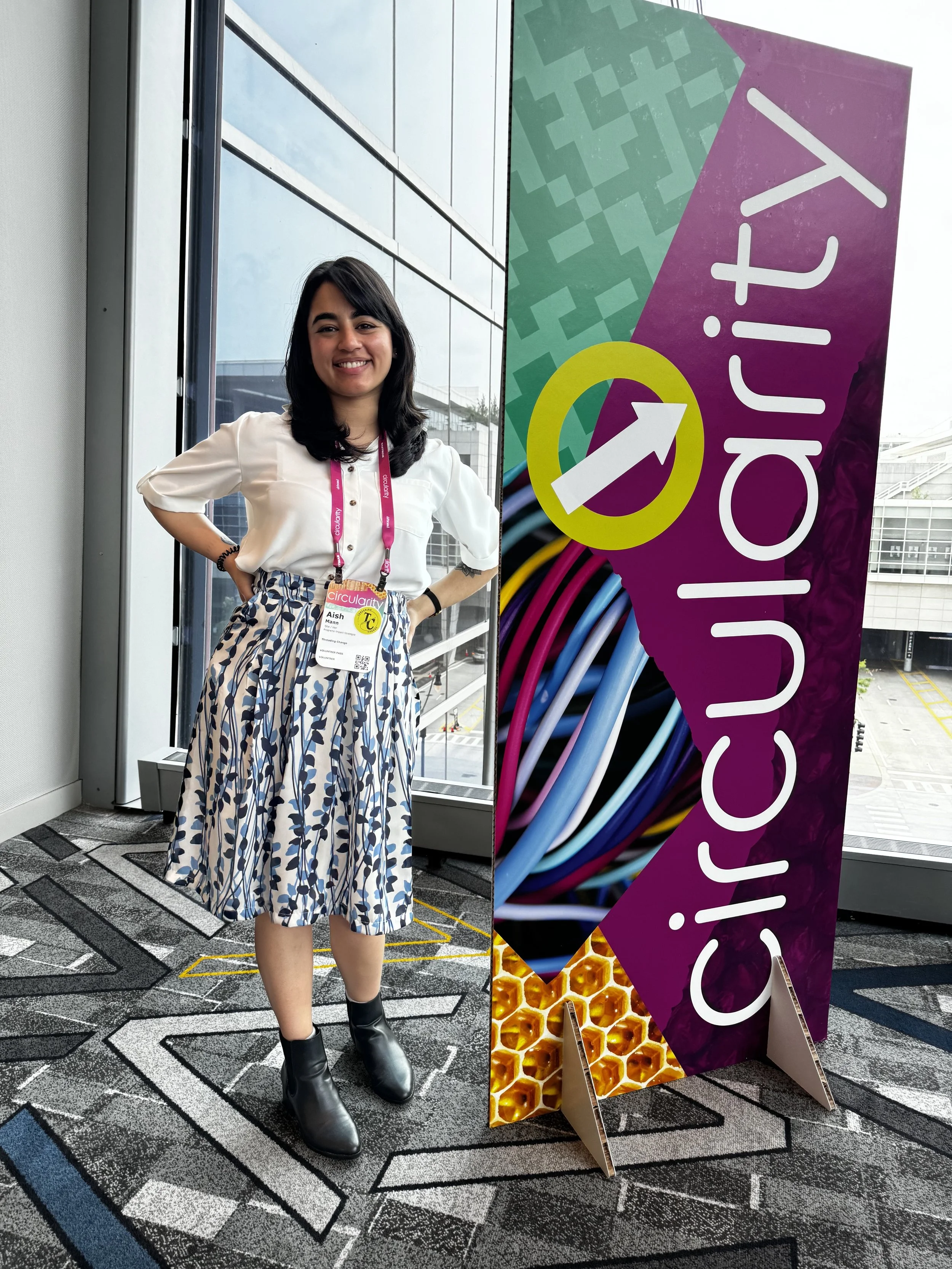
Crucially, the grant was delivered early enough to make a real difference. Aish was able to book travel in advance, avoiding high last-minute fares.
“I was coming to a point where, after volunteering with Threading Change and juggling multiple jobs, I was losing hope,” she recalled. At a time when we need all hands on deck to address the climate crisis, the sector faces significant losses with skilled and experienced newcomers forced to leave the sector.
For Aish, the Access Grant wasn’t just about logistics—it was about dignity. It allowed her to enter the space on equal footing, without compromise, and with the resources she needed to be fully present.
“Being able to access these spaces was a relief. The [FES] team was so helpful and supportive throughout the process.”
The ripple effects of this opportunity were immediate and far-reaching. Just weeks after returning from Chicago, Aish secured her first paid leadership position in the sustainability sector—as Development & Impact Director at Threading Change. It was a major milestone in her journey, recognizing both her talent and her tireless dedication to the movement.
In her new role, Aish helped lead the organization’s successful application to join the Fair Labor Association—positioning Threading Change alongside major global brands like Nike and Adidas in critical policy discussions. Her presence at Circularity 24 had a broader impact, too.
“Youth organizers in the U.S. have since adopted one of her workshop formats,” she noted, helping to spread youth-led climate advocacy across borders.
Today, Aish’s leadership directly informs Threading Change’s efforts to advance Extended Producer Responsibility (EPR) policies in Canada and British Columbia. These policies hold brands accountable for the full lifecycle of their products, helping to reduce environmental harm and safeguard workers’ rights.
Reflecting on the experience, Aish shared,
“My experience with FES and The Youth Harbour has been truly transformative. Their support not only enabled me to engage with experts and fellow leaders at Circularity 24 but provided unparalleled access and exposure. I am deeply grateful for the opportunities to expand my horizons and further commit to climate advocacy.”
Looking ahead, Aish is committed to amplifying newcomer and underrepresented voices in the climate justice space. She’s actively fostering cross-sector collaborations and expanding Threading Change’s programming into the U.S.—with a focus on youth-led, intersectional solutions to the fashion industry’s global challenges.
The tools she gained from FES—like budgeting templates, evaluation frameworks, and grant navigation strategies—have now become part of her long-term practice.
“The budgeting templates I learned from the Access Grant have been invaluable,” she said. “I use those same templates for all my monthly expense tracking now, even for other fellowships.”
Youth leaders like Aish are breaking down barriers and building climate-resilient communities through bold, intersectional action. Your support can help remove the obstacles that keep other young changemakers from stepping into spaces where their voices are urgently needed.