Fostering Safe Spaces for Marginalized Communities
Rising from our Roots Impact Story
Atreyu Lewis, the founder of Rising from our Roots, shares insights into their grassroots organization’s mission. Operating in Toronto* and Montreal*, the entirely volunteer-run group aims to support marginalized youth, especially those who are BIPOC, 2SLGBTQ+, or disabled.
Their event, The Climate Roots Fair, bridges art, climate justice, and community solidarity. Atreyu explains that Rising from our Roots focuses on providing resources and safe spaces for marginalized youth. They conduct training on harm reduction and anti-oppression and host community solidarity events in both cities.
Atreyu said that what inspired The Climate Roots Fair idea was attending other events and thinking, “it would be cool to merge art and social justice together, and invite youth to celebrate together, listen to music and find new outlets for consuming products that are more sustainable.”
The Climate Roots Fair seeks to address representation and accessibility gaps for underrepresented artists and vendors. Atreyu was inspired by conversations with friends experiencing discrimination in mainstream markets. They envisioned an inclusive event merging art, social justice, and climate action.
Atreyu thought it would be awesome if there was an “event that intersected underrepresented youth artists and small businesses in a welcoming space for them”, while also merging the discussion and intersectionality with climate action.
Occurring on March 9, 2024, at Toronto’s Centre for Social Innovation, the fair included panel discussions with climate activists and a market featuring local artists and sustainable businesses. The aim was twofold: to engage youth in climate discussions and promote underrepresented artists and vendors.
The fair showcased BIPOC Queer Trans artists and vendors offering sustainable fashion alternatives. Atreyu hoped for an attendance of 50 to 100 people, emphasizing accessibility and inclusivity for all attendees. Vendors were paid an honorarium to ensure equitable participation.
Atreyu mentioned that, “the end goal is for people to reclaim and root themselves in their identities.”

Attendees engaged with educators on topics like slow fashion, grassroots art, and climate resiliency strategies. Independent artists created and shared art, fostering community engagement and discussion.
When organizing the event, Rising from our Roots faced challenges in marketing and outreach. Limited resources required strategic venue choices and reliance on social media and grassroots networks for promotion. Securing grants, like those from The Youth Harbour, helped cover event costs and expand reach.
They are also active members part of the Youth Harbour’s Climate ShareSpace program at the Centre for Social Innovation (CSI):
“Being a member at the CSI workplace is a great opportunity to be able to co-work with other like-minded youth and meet other members who live in the city and are doing work on social justice advocacy, climate justice and public policy. It’s an accessible environment where I can both do grassroots work and run events for youth who are looking for a safe third space in the city,” Atreyu shared.
The overarching goal of the fair, and all Rising from our Roots events, is to create inclusive spaces where marginalized community members, especially youth, feel heard and empowered. Atreyu stresses the importance of reclaiming identities and fostering community care through non-hierarchical, anti-oppressive knowledge.
Looking ahead, Rising from our Roots seeks to expand its volunteer base and increase outreach for future initiatives. Those interested in participating or volunteering can connect through their Instagram page or recruitment form.
The Climate Roots Fair stands as a testament to Rising from our Roots’ commitment to intersectionality, community engagement, and climate justice. Through events like these, they strive to amplify marginalized voices and enact meaningful change at the local level.
* The land on which Rising from our Roots operates is the traditional territory of many Indigenous peoples. In Toronto, this includes the traditional territory of many nations including the Mississaugas of the Credit, the Anishnabeg, the Chippewa, the Haudenosaunee and the Wendat peoples. Montreal is situated on the traditional territory of the Kanien’kehà:ka (Mohawk) Nation, including the Kanien’kehá:ka of the Haudenosaunee Confederacy, Huron/Wendat, Abenaki, and Anishinaabeg.


The Green Career Centre’s Journey to Equity in the Green Economy
The Green Career Centre Impact Story
Lauren Castelino, an environmentalist, entrepreneur, researcher, and activist, shares her journey founding the Green Career Centre* in 2018.
“I started the Green Career Centre six years ago after I graduated from high school. I wanted to combine my interests of the environment, entrepreneurship, and youth empowerment to create something that others could get involved in tackling the issues that I was passionate about solving. We were quite different back then; we had a different name and focus, but we quickly evolved over time.” Lauren explained.
Funded by her university’s research and experiential education offices, Lauren conducted webinars, focus groups, and interviews to gather insights. Her efforts culminated in a policy brief presented to policymakers at Natural Resources Canada, advocating for the inclusion of underrepresented youth in employment programs.
“I was so happy to see that my recommendation on lifting the cap on the number of hours that international students were restricted to working was eventually temporarily lifted for two years. I felt like my advocacy efforts paid off, and due to overwhelming demand for more equity-seeking youth wanting to land a green job, the Green Career Centre was born.” Lauren shared.
The Green Career Centre stands out for several reasons, including its emphasis on consultation with the communities it serves. Through focus groups and consultations, particularly with BIPOC, women, and newcomers, the organization ensures its initiatives are responsive and representative. Their team composition reflects this commitment, with 89% BIPOC and 78% women representation.
“Everything that we do and develop is done in direct consultation with the communities that we represent and serve. Whenever there’s an issue that we want to tackle, we always start by hosting focus groups and consultations with impacted communities, specifically equity seeking communities—young Black, Indigenous and People of Colour, women and newcomers.”
Action-oriented and centralized in its approach, the Green Career Centre prioritizes events and resources that are accessible and impactful. Their Youth Green Jobs Network job board, research publications, and workshops have garnered significant engagement, with over 1500 attendees at events and workshops.

An annual Green Career Fair, supported by The Youth Harbour Action Grant, has been a major achievement, attracting over 550 participants. The organization’s resources, such as the Wage Subsidy Matching Tool and Green Equity Guide for Employers, aim to promote inclusivity and equity in the sustainability sector.
“Thanks to [The Youth Harbour’s] flexibility and accessibility as a youth-led organization, they supported our development of various green job resources as well as several research projects, including one that focuses on the federal government’s Sustainable Jobs Plan.
They are also active members part of the Youth Harbour’s Climate ShareSpace program at the Centre for Social Innovation (CSI):
“We are very grateful to Climate ShareSpace for allowing our team to have the opportunity to convene in-person to actively work on our mission of preparing underrepresented youth for green careers. CSI’s space has allowed our team to access vital services that our members cannot access at home such as high-speed internet; the environment is very social with a variety of community events such as the salad club that we’ve happily participated in.”
Through its innovative approach and community-centered ethos, the Green Career Centre continues to empower marginalized youth and advance equity in the green economy.
*The Green Career Centre is based in Tkaronto which is covered under Treaty 13, and they acknowledge that this is the traditional territory of many nations including the Mississaugas of the Credit, the Anishnabeg, the Chippewa and the Haudenosaunee and Wendat peoples.

Edmontonians Envision a More Livable, Movable, and Human City
If you live in Edmonton*, you likely know about Paths for People, a non-profit grassroots organization advocating for multimodal transportation systems in the city. With a membership of about 1,500 people across Edmonton, Paths for People engages in direct advocacy with the municipal government as well as creating educational programs to help Edmontonians envision their streets differently. Their goal is to strive for a livable city that isn’t driven by car-centered infrastructure, but rather infrastructure focused on shared-use paths, safer crosswalks and sidewalks, better bike lanes, and walkable pathways all across the city and suburbs.
Paths for People came to fruition around the mid 2010s where they strived to install a bike grid in downtown Edmonton and to create clear bike lane separation. Recognizing the broader need to enhance city-wide safety and livability, the organization has broadened its scope to encompass a holistic approach to urban infrastructure. This evolution mirrors their inclusive organizational structure, which values diverse perspectives and expertise.

Stephen, who serves as the volunteer chair of the Paths for People Board, highlighted the organization’s distinctive structure. He noted, “We navigate the delicate balance between grassroots activism and engaging in public policy advocacy. Our approach involves presenting diverse perspectives, including those of engineers, public health experts, and community engagement specialists, to influence city planning decisions regarding public transportation.”
Central to their mission is the drive to instigate a paradigm shift in urban planning towards prioritizing multimodal transportation. The initial idea of a downtown bike grid was an “exceptional basis in infrastructure planning where the city agreed to ‘try something new,’ Stephen shared.
One significant hurdle lies in public perception. Habituated to car-centric urban landscapes, Edmontonians must be persuaded to embrace alternative modes of transportation, particularly in harsh winter conditions. Overcoming this resistance demands nuanced outreach strategies, leveraging existing communities like avid cyclists to amplify advocacy efforts and promote safer streets.
The other major challenge, as many not-for-profit organizations face, is funding their programs and projects. Access to The Youth Harbour Action Grant was fundamental in mobilizing the advocacy needed to implement a municipal budget specifically towards active transportation systems. With the grant, Paths for People was able to influence the City Council’s decision to approve $100 million in the capital budget specifically for active transportation. This has sparked the development of projects and construction of kilometers of infrastructure.

Yet, there remains a need to dispel misconceptions about the scope of such initiatives. Projects like ‘Missing Links,’ which identifies and address gaps in pedestrian infrastructure, underscore the broader societal benefits of prioritizing active transportation. Unlike what some Edmontonians think, this isn’t a fund “just for bikes.”
Connecting sidewalks between neighborhood sections improves pedestrian mobility, particularly in snowy conditions when unpaved paths are blocked. Inadequate infrastructure limits residents’ ability to engage with their community, despite cars taking precedence in development.
Looking ahead, Paths for People remains committed to its mission of fostering a safer, healthier, and more inclusive urban environment. By prioritizing strategic planning, fostering community engagement, and advocating for sustainable funding, they aim to ensure their work continues to shape Edmonton’s transportation landscape for years to come.
“A lot of nonprofits can end up feeling like chickens running around with their heads cut off and end up stumbling because long-term planning can be difficult,” Stephen shared. “The [Youth Harbour] funding supported stability for the organization so we could recruit new leaders for tomorrow.”
*Edmonton is situated on Treaty Six Territory and within the Métis Nation of Alberta Region 4, traditional territories of numerous First Nations, including the Nêhiyaw (Cree), Denesuliné (Dene), Anishinaabe (Saulteaux), Nakota Sioux (Stoney), and Niitsitapi (Blackfoot).

Connecting Youth Climate Leaders with an Intergenerational Network of Climate Educators
Rooted and Rising Impact Story
How frequently do you encounter a space where you’re actively invited and challenged to envision the future you desire?
The Rooted and Rising Lab is a program that intends to create a space for intergenerational community networks to do just that. It’s a hub where students from diverse backgrounds, spanning artists to activists, converge to radically reimagine climate education and the trajectory of our world.
The genesis of this initiative can be traced back to the Conscious Minds Camp & Co-op, a youth-led summer camp in the Greater Toronto Area* co-founded by Kristen and Roxy. Here, youth are encouraged to explore themes like decolonization, climate change, holistic living, and human rights.
In response to a surge of young climate leaders yearning for supportive learning spaces, Roxy redirected her focus in 2019 towards creating the Rooted and Rising Lab. Teaming up with Bella and Kristen, alongside eight other dedicated individuals, they embarked on designing a program rooted in both academic and non-academic education, with community and relationship-building at its core. By embracing diverse perspectives and experts in climate justice work, they crafted an intergenerational learning space led by participants.
They decided they would provide youth with guidance from educators and elders, creating an intergenerational learning space. However, the space would be led by the participants to ask questions and discuss solutions with their peers facing similar challenges and dilemmas in their journey to leading climate solutions.
The pilot program, launched in Fall 2020, brought together 22 participants aged 13-30 over 10 weeks of virtual sessions. Through introspective learning and practical project-based approaches, participants delved into topics like leadership, solidarity, and decolonized learning, culminating in the creation of seven impactful projects funded with the help of The Youth Harbour Action Grant.
The Youth Harbour grant additionally supported Rooted and Rising’s honorariums for teachers and other activity costs during the program, such as the Toronto city tour to teach about regenerative agriculture.
However, sustaining the program poses challenges, particularly in securing consistent funding and carving out sufficient time for in-depth exploration.
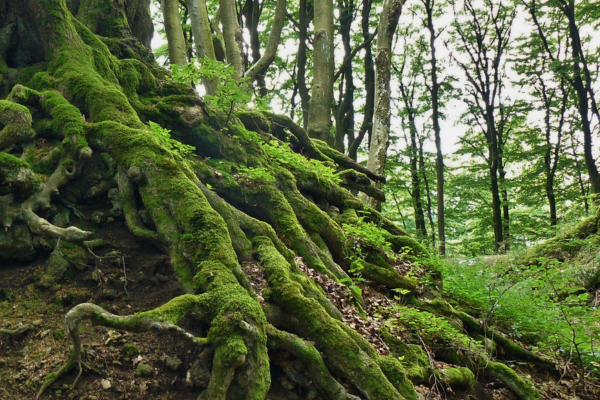
Bella, who helps facilitate and coordinate the program, noted that “they need more time to explore and dig deeper; to have longer dialogue on certain topics.” They’re discussing how to make this possible, whether it be through more intensive programs or more sessions. They also want to have more land projects.
Participant feedback echoes the sentiment of the Lab being a safe haven for self-reflection and growth, with many expressing newfound understanding of their leadership roles and ancestral connections. Kristen notes the emergence of wisdom and expertise within the cohort, underscoring the program’s ability to cultivate a supportive community.
“Participants had the space to return to being the full version of themselves; that they felt welcomed to arrive that way,” Kristen shared. Roxy expressed that, as an organizer of the program, “it was lovely to see how supportive people were with each other during the program.”
It was also pointed out that this year’s cohort were really invested in their projects, some of them creating projects coming from relationality to others within and outside the project. For example, one student’s project connected her work with an organization for reproductive healthcare for trans and gender non-conforming folks. “This affirms the idea of complementing what youth are already doing with the knowledge and guidance provided through Rooted and Rising,” said Bella.
The program intends to plant the seed, then let it grow freely. “Setting up participants with the networks and knowledge to do new things that can’t be anticipated from the Rooted and Rising program. The level of connection and self discovery indicated to me that there were some important seeds planted for future endeavors in climate and social justice pursuits,” Bella shared.
Looking ahead, the Lab envisions expanding its reach through initiatives like a DIY course and a teacher training program, while also exploring avenues to stay connected with alumni. With a wave of support from various quarters, the Lab remains poised to inspire the next generation of changemakers, nurturing seeds of change that will blossom with time and care.
* The Rooted and Rising lab is based in Tkaronto, governed by the Dish With One Spoon Wampum Treaty 13 Territory.

New York Climate Week Blog 3: Climate Finance, Philanthropy, and A Lot of Jargon
As I delved into the complexities of climate finance and philanthropy, I was struck by the pressing questions surrounding how movements, corporations, and foundations perceive and engage with climate finance.
https://www.theyouthharbour.org/new-york-climate-week-blog-3-climate-finance-philanthropy-and-a-lot-of-jargon/


New York Climate Week Blog 1: People Power
As I delved into the complexities of climate finance and philanthropy, I was struck by the pressing questions surrounding how movements, corporations, and foundations perceive and engage with climate finance.